
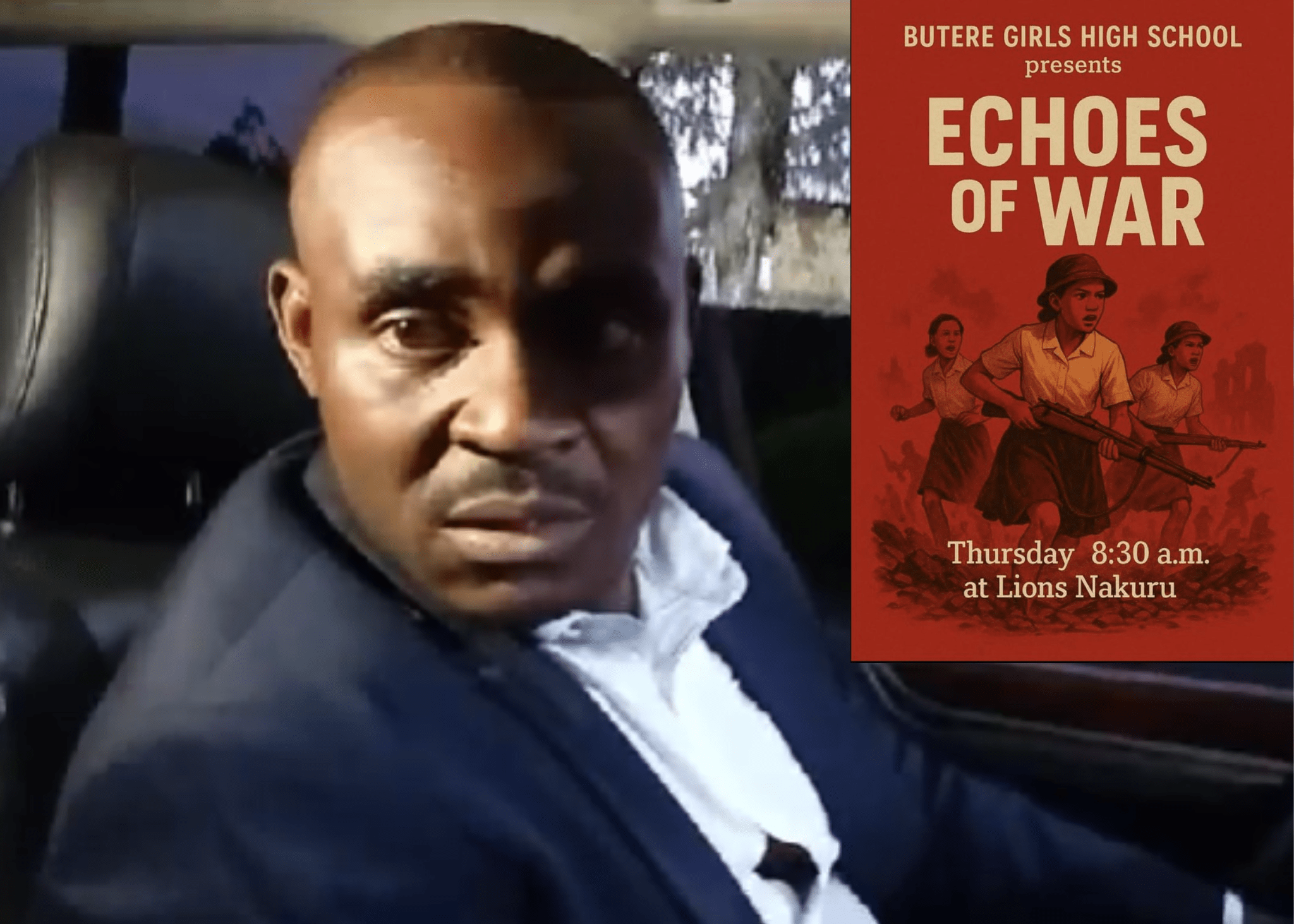
In a dramatic turn of events, former Kakamega Senator Cleophas Malala has found himself at the center of controversy surrounding the play “Echoes of War,” which he scripted for Butere Girls High School. The play, delving into themes of governance, technology, and social justice, has ignited national debate and led to Malala’s alleged arrest by the Directorate of Criminal Investigations (DCI).
The Genesis of the Controversy
“Echoes of War” portrays a nation rebuilding after civil unrest, with its youth spearheading efforts toward societal change. The narrative critically examines digital platforms’ roles in governance and underscores the influence of younger generations in shaping the future. Initially, the play faced prohibition from the Kenya National Drama and Film Festival organizers, citing its critical stance toward the government. However, on April 3, Justice Wilfrida Okwany lifted the ban, allowing Butere Girls to present their piece at the national level.
A Tense Standoff in Nakuru
On April 9, tensions escalated when Malala attempted to join the Butere Girls’ drama team at Kirobon Girls High School in Nakuru County for final rehearsals. Police officers, both uniformed and in plain clothes, intercepted him, leading to a heated confrontation. Malala questioned the officers’ actions, emphasizing his role as a playwright and the legitimacy granted by the court’s decision. He expressed frustration, stating, “You are arresting me for just writing a play. What offense have I committed?”
Allegations of Harassment and Legal Defiance
Malala accused the authorities of harassment and of defying a court order that permitted the play’s performance. He highlighted the injustice faced by the students, who were allegedly confined and denied access to their scriptwriter ahead of their presentation. Despite producing the court’s directive, Malala claimed he was forcibly removed and taken to an undisclosed location, raising concerns about adherence to legal processes.
Media Caught in the Crossfire
The altercation also impacted journalists covering the incident. Reports indicate that police used tear gas, resulting in injuries to several media personnel, including those from Nation Media Group and Citizen TV. This development has sparked discussions about press freedom and the treatment of journalists in the line of duty.
Broader Implications and Public Discourse
The unfolding events have ignited a broader conversation about artistic expression, censorship, and the role of youth in political discourse. Supporters argue that “Echoes of War” serves as a mirror to society, reflecting pressing issues that warrant open discussion. Critics, however, view the play as potentially incendiary, given Kenya’s complex political landscape.
As the nation watches closely, the resolution of this controversy will likely set a precedent for the balance between creative freedom and governmental oversight in Kenya’s artistic and educational arenas.
For more information or inquiries, feel free to reach out to us through any of the following channels. Additionally, our team is always ready to assist you promptly.
✅ Contact TrendBlend Hub.
🌐 Website – Click Here
📞 WhatsApp | Call: +254 743 149 267 | +254 738 352 258
✉️ Email Address: info@trendblend.co.ke | sales@trendblend.co.ke
📸 Follow our IG: @TrendBlendHubKe


